
Sudoku Quest Tips and Tricks: Use Candidate Notes and Number Elimination to Solve Puzzles
Sudoku Quest combines classic number puzzles with a level-based adventure. As the puzzles become more challenging, filling empty cells by guessing can lead to mistakes. A better approach is to use candidate notes, check each row and column, and place numbers only when the available logic supports them.
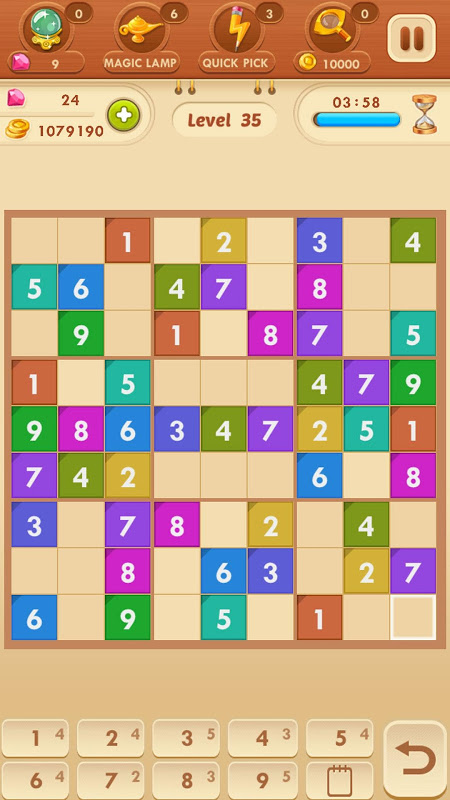
1. Check Rows, Columns, and Boxes Before Placing a Number
The most reliable way to solve a Sudoku puzzle is to check all three restrictions before entering a number. A valid number must not already appear in its row, column, or box.
When you focus on one empty cell, inspect its row first. Then check the column and the surrounding box. Remove every number that already appears in one of those areas. The remaining numbers are the possible candidates for that cell.
2. Use Candidate Notes to Track Possible Numbers
Candidate notes are useful when a cell has more than one possible answer. Instead of remembering every possibility, record the candidates and update them as the board changes.
- Start with obvious cells: Look for empty cells with only one possible number.
- Update nearby notes: When you place a number, remove it from related candidate lists.
- Avoid random entries: Keep uncertain numbers as notes until the puzzle provides enough evidence.
This method reduces memory pressure and makes hidden opportunities easier to notice.
3. Look for Numbers That Have Only One Possible Position
A number may have several possible cells across the board, but only one valid position inside a particular row, column, or box. This is often called a hidden single.
Choose one number and scan the relevant area. If every other empty cell is blocked by an existing number, the remaining cell must contain that number. This approach is often more useful than checking every empty cell separately.
4. Choose the Right Grid Challenge
Sudoku Quest includes multiple grid sizes and puzzle variations. A smaller grid can help you practise basic elimination, while larger grids require more careful tracking of candidates.
When moving to a new grid size or variation, take time to understand its rules before trying to solve it quickly. A strategy that works for a standard puzzle may need adjustment when the layout changes.
5. Use Hints and Undo to Learn From Mistakes
Sudoku Quest includes helpful tools such as hints and undo. Use a hint when you cannot identify a logical next move. Pay attention to the explanation or revealed placement instead of treating it as a shortcut to finish the board.
If an entry creates a conflict, undo it and review the related row, column, and box. Correcting the reasoning behind a mistake is more useful than repeatedly entering new numbers.
FAQ
Should I guess when I cannot find a number?
It is better to review candidate notes and scan for hidden singles first. Guessing can create extra mistakes and make the board harder to understand.
When should I use notes?
Use notes when a cell has several valid candidates. Update them whenever a number is placed in the same row, column, or box.
Are hints useful for learning Sudoku?
Yes. Use them to understand a logical move, then apply the same checking method to the next puzzle.
Consistent scanning and careful candidate tracking are more reliable than fast guessing. For more Android game information and guides, visit androidgameguides.com.